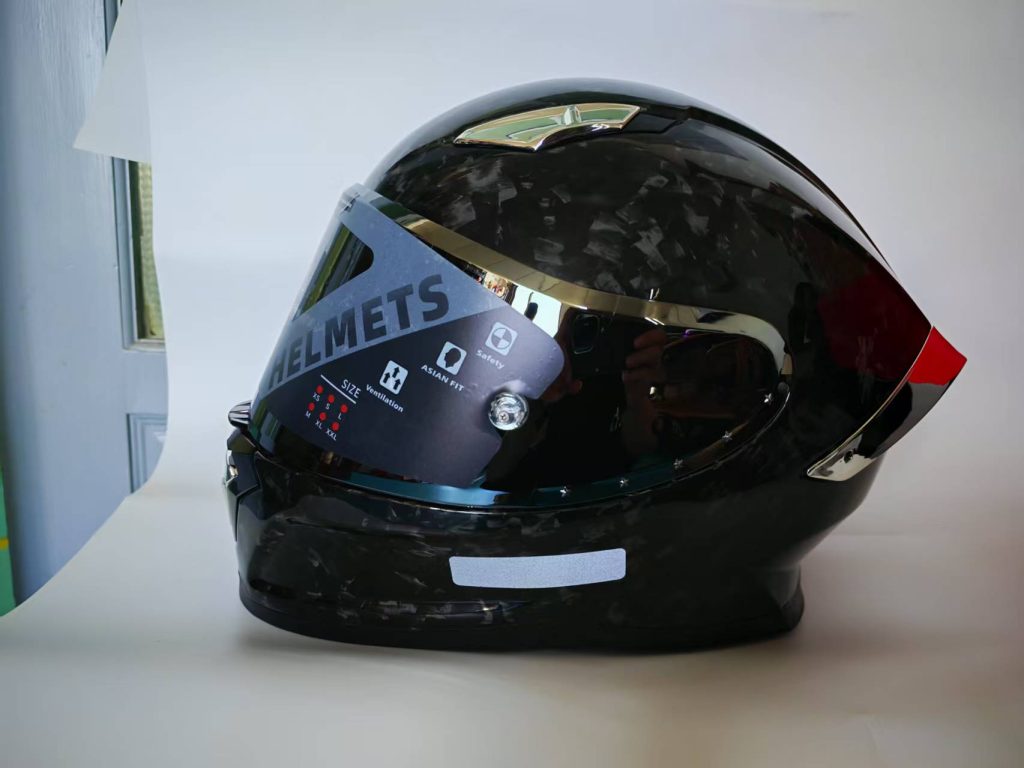
The Lifesaving Shell
Since the dawn of motorcycling, the helmet has stood as the single most critical piece of safety equipment between a rider and the road. What began as rudimentary leather caps has evolved into a sophisticated fusion of materials science, biomechanical engineering, and digital technology. For manufacturers, riders, and regulators alike, the modern helmet represents a relentless pursuit of one goal: to preserve human life. This article explores the multi-faceted world of motorcycle helmet design, the science of protection, and the future of rider safety.
The Anatomy of Protection – More Than Just a Shell
A contemporary helmet is a meticulously layered system, where each component serves a distinct, vital function.
- The Outer Shell: This is the first line of defense. Made from advanced materials like polycarbonate (lightweight and tough), fiberglass composite (excellent strength-to-weight ratio), or carbon fiber/aramid (premium strength and minimal weight), its primary job is to distribute impact forces over a wider area and prevent penetration. Shell design also incorporates aerodynamics to reduce lift and neck strain at high speeds and noise-causing turbulence.
- The Impact-Absorbing Liner: Beneath the shell lies the heart of the helmet’s protective capability: the Expanded Polystyrene (EPS) foam liner. This dense, crushable layer is engineered to manage kinetic energy. Upon impact, the EPS cells compress in a controlled manner, decelerating the head and dissipating energy before it reaches the skull and brain. Advanced helmets often use multi-density EPS, with softer zones for low-velocity impacts and firmer zones for high-velocity protection.
- The Comfort Liner & Padding: Directly contacting the rider is the removable, washable interior. Made from moisture-wicking, antimicrobial fabrics like CoolMax®, it ensures comfort, hygiene, and a secure, stable fit. A proper fit is itself a safety feature—a helmet that shifts or comes off in an accident offers zero protection. This layer also incorporates cheek pads designed for emergency service removal (Emergency Quick Release systems).
- The Retention System: The Chin Strap: A helmet is only as secure as its strap. The double-D-ring system remains the gold standard for security, while micrometric quick-release buckles offer convenience with robust testing. This system must keep the helmet firmly positioned during the complex dynamics of a crash.
- The Face Shield (Visor): A critical optical component, modern visors are made from optically correct, scratch-resistant polycarbonate. They offer 100% UV protection and often feature treatments like anti-fog (e.g., Pinlock® lens systems) and anti-reflection. A quick-release mechanism allows for easy changing between clear, tinted, or photochromic lenses.
The Science of Standards – Understanding Certifications
A helmet’s safety claims are validated through rigorous, standardized testing. Key global standards include:
- ECE 22.06: The latest United Nations Economic Commission for Europe regulation, now the de facto standard in over 50 countries. It is more comprehensive than its predecessor (22.05), testing for:
- Angular Acceleration (Rotational Forces): New oblique impact tests measure a helmet’s ability to mitigate brain injury from rotational motion.
- Wider Field of View: Mandates a minimum horizontal vision of 200°.
- Enhanced Chin Bar Testing: For modular/flip-up helmets.
- Strap Strength & Rigidity Tests.
- DOT FMVSS 218: The U.S. Department of Transportation standard. It is a self-certification standard where the manufacturer declares compliance.
- Snell M2020/SA2020: A voluntary, non-governmental standard set by the Snell Memorial Foundation. It is often more stringent in certain high-velocity impact tests and is popular among performance-oriented riders. Snell certification is typically renewed every 5 years.
- FIM Homologation (FRHPhe): The Fédération Internationale de Motocyclisme‘s elite racing standard, representing the highest tier of performance for track use.
The Crucial Difference: ECE is a type-approval standard (testing specific production samples), while Snell is a specification standard (defining performance benchmarks).
The Future is Integrated and Intelligent
Helmet technology is entering a new era of connectivity and active safety.
- MIPS & Rotational Energy Management: Multi-directional Impact Protection System (MIPS) is a low-friction layer inside the helmet that allows a slight rotational movement (10-15mm) upon angled impact. This is designed to reduce the transfer of rotational forces to the brain, mimicking the cerebrospinal fluid’s protective function in the skull.
- Integrated Communication Systems: Helmets are now platforms for mesh intercom Bluetooth systems (e.g., Cardo, Sena). Riders can communicate in groups, listen to music, get GPS navigation, and make calls—all without removing their hands from the controls.
- Advanced Materials: Research continues into new composite matrices, variable-density foams that adapt to impact severity, and even liquid armor technologies.
- Heads-Up Displays (HUD) & Augmented Reality: Prototypes exist that project speed, navigation, and rear-view camera feeds directly onto the visor, creating a safer, more immersive riding experience.
- Emergency Alert Systems: Some high-end helmets now integrate ACC (Automatic Crash Notification) sensors. In a significant impact, the helmet can send an alert with GPS coordinates to emergency services or pre-set contacts.
The Manufacturer’s Imperative: Quality, Ethics, and Education
As manufacturers, our responsibility extends beyond production:
- Relentless Quality Control: Every batch of materials and every finished helmet must pass stringent checks. Consistency is key to trust.
- Consumer Education: We must clearly explain the meaning of certifications, the importance of fit, and helmet care (replacement after any significant impact, typically every 5 years due to material degradation).
- Ethical Marketing: Promoting style is valid, but safety performance must always be the primary message.
A Covenant of Safety
The motorcycle helmet is a testament to human ingenuity in the face of risk. It is a product where aesthetics, comfort, and cutting-edge technology must converge to fulfill a sacred promise: bringing riders home safely. For manufacturers, it is not merely a product to be sold, but a covenant of safety with every person who trusts our brand with their protection. As technology advances, this covenant deepens, driving us to innovate relentlessly in the noble pursuit of saving lives on the road.