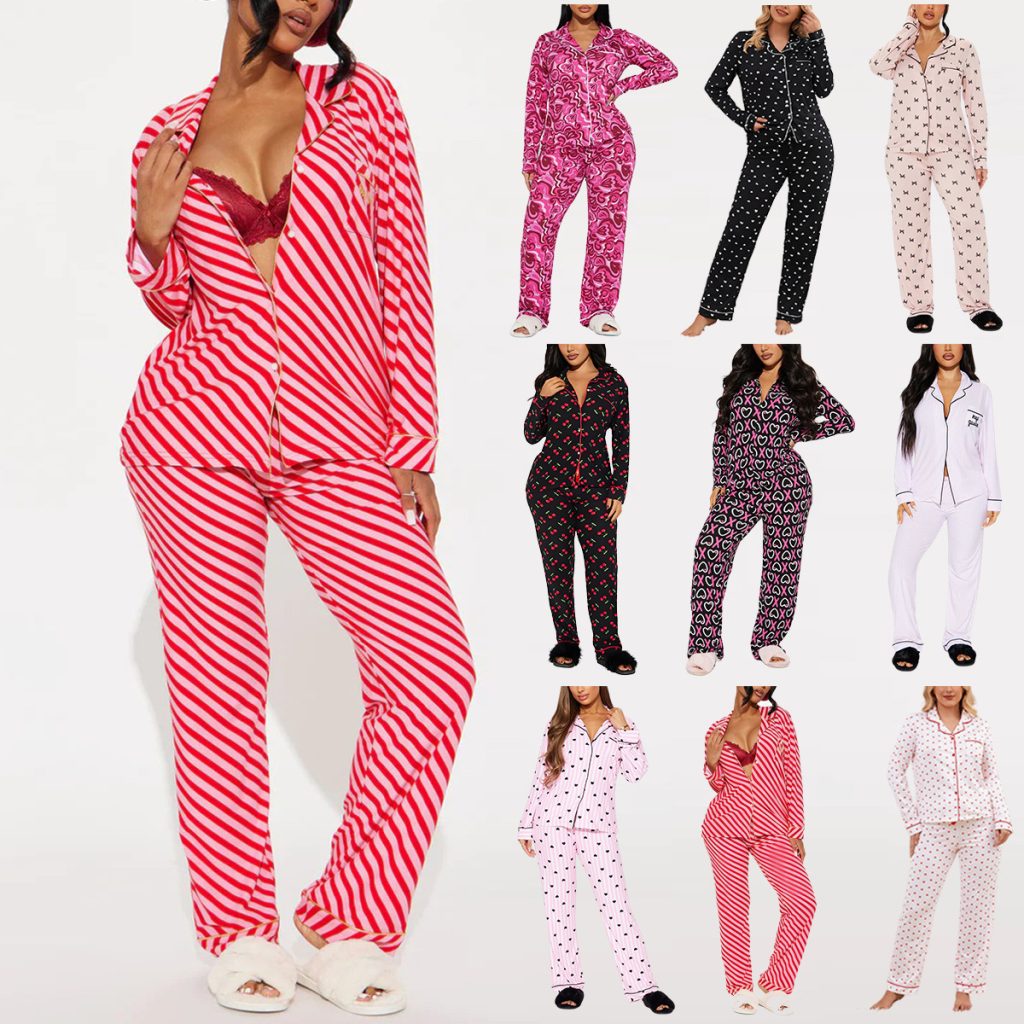
In the United States, pajamas are not merely what you wear to sleep. They are the unofficial uniform of weekends, the armor of early mornings, and the foundation of the deeply cherished concept of “lounging.” To understand American sleepwear is to understand a culture that values practicality, individualism, and the ability to transition seamlessly from the bedroom to the sidewalk without changing a single thing.
The Philosophy of “Out of House”
Unlike many cultures where sleepwear remains strictly private, the American relationship with pajamas is surprisingly public. It is common to see someone grabbing mail, walking a dog, or dashing into a convenience store for coffee while still in their pajamas. This phenomenon is not born of laziness, but of a distinctly American prioritization of comfort and efficiency .
This cultural trait has shaped the market. American pajamas are often designed with the “CVS test” in mind—a term coined by industry insiders to describe whether a garment looks presentable enough for a quick errand . They occupy a unique space between sleepwear and “athleisure,” comfortable enough for bed but styled well enough for a morning school drop-off. The rise of social media has amplified this trend, with influencers broadcasting their “morning sheds” and daily routines in coordinated sets, transforming pajamas from private necessity into public lifestyle statement .
The Brands Americans Trust
The American sleepwear market is defined by a few household names that have earned consumer loyalty through decades of consistent quality .
Hanes stands as the titan of the affordable market. As a 100+ year-old brand, it represents the democratic ideal of American fashion: good quality at a price everyone can afford. Their classic crewneck T-shirts and loose-fit sleep pants are staples in millions of drawers, prized for their durability through countless washes. For the average American family, Hanes is the default choice for “no-fuss” comfort .
At the other end of the spectrum lies Lululemon. While technically an athletic brand, its “Home Collection” has redefined luxury loungewear for Americans. By applying their technical Nulu™ fabric—originally designed for yoga—to wide-leg pants and relaxed tops, they created a category of “performance loungewear.” Americans are willing to pay a premium for this because the fabric holds its shape, resists pilling, and provides a sensory experience of “naked sensation” that cheaper fabrics cannot replicate. It represents the American belief that investing in personal comfort is investing in personal well-being .
Between these poles sits Aerie, a brand that captured the heart of younger generations through its commitment to “body inclusivity” and un-retouched advertising. Their “cloud cotton” and modal fabrics offer a softness that appeals to Gen Z and Millennials, while their playful designs—often featuring collaborations with pop culture franchises like Disney—make loungewear feel personal and expressive .
Fabric and Function
The American consumer is pragmatic. They demand fabrics that are easy to care for—machine washable and dryer friendly. Cotton remains king for its breathability and familiarity, but modal and TENCEL™ have gained significant ground for their silky feel and moisture-wicking properties . There is a growing awareness of sustainability, with brands like Madewell incorporating recycled fibers and organic cotton into their sleepwear lines, appealing to the environmentally conscious shopper .
The Rise of the Matching Set
Perhaps the most visible trend in American sleepwear is the coordinated matching set. Inspired by celebrities like Kendall Jenner and Hailey Bieber, who have been photographed in chic pajama shorts and button-down tops, the matching set signals intentionality . It suggests that while you are comfortable, you are not sloppy. This “lazy chic” aesthetic has been embraced by major brands and fast-fashion retailers alike, turning pajamas into a legitimate fashion category .
For the American consumer, pajamas are no longer just about the night. They are about the entire weekend experience—the slow mornings, the coffee on the couch, the flexibility to step outside without changing. In a culture that never stops moving, having clothing that allows you to rest without retreating from the world is not just a luxury; it is a necessity.