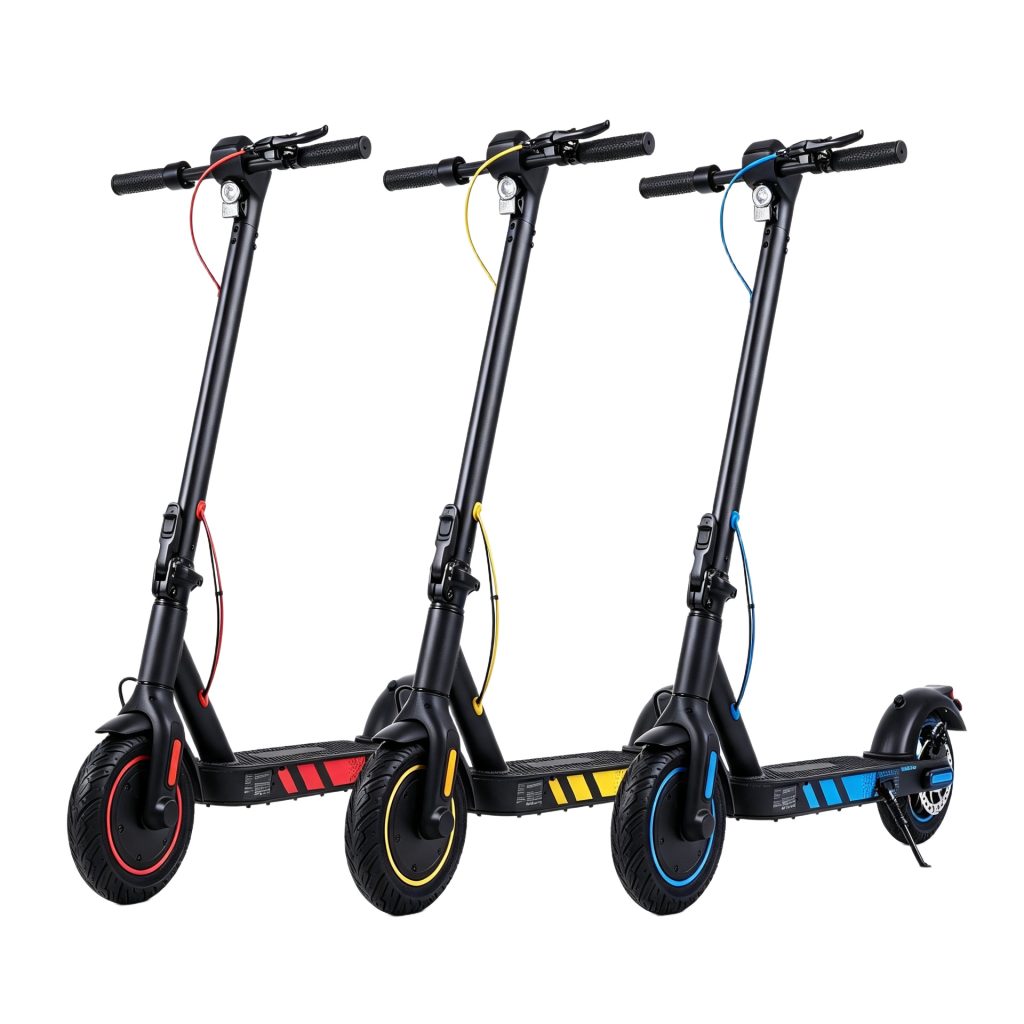
Urban travel has an awkward gap: too far to walk, too close to drive, and public transit takes a detour. For a distance of two or three kilometers, a taxi isn’t worth it and walking wastes time. This “last mile” problem troubles plenty of people. Electric scooters fill exactly this gap, becoming a practical choice for short trips with their compact form and hop-on-and-go convenience.
Small Size Is Its Biggest Advantage
The most obvious feature of an electric scooter is its size. Compared with bicycles and e-bikes, it folds up easily and can be carried into an elevator, tucked into a car trunk, or even brought into the office and placed beside your desk. This means it truly achieves door-to-door travel: no need to walk ten minutes to the bike shed first, and no worry about finding a parking spot at your destination. For people living in old buildings without elevators, or commuters whose routes require transfers, this size advantage is especially practical.
Another benefit of portability is flexibility. When traffic jams, it can slip into a side street; when facing stairs, fold it up and carry it a few steps; on the subway or bus, it folds up and comes along, enabling seamless connections between multiple modes of transport. It doesn’t replace public transit, it fills in the stretch that public transit can’t reach.
For Short Trips, It’s More Practical Than You’d Think
The scenarios where electric scooters work are broader than many people assume. Office workers use them to connect home to the subway station, saving walking time; students ride them between dorms and classrooms, less tiring than a bicycle; grocery runs, package pickups, trips to the nearby convenience store, these everyday errands of three to five kilometers take just minutes on a scooter, far faster than driving around looking for parking.
The barrier to riding is also low. No license needed, easy to learn, and an adult can master the basics in minutes. Compared with e-bikes, its speed is moderate, making it better suited to bike lanes and enclosed or semi-enclosed environments like campuses and industrial parks. For people who just want to get around the neighborhood without chasing long-distance speed, this positioning is just right.
Environmental Friendliness Is an Overlooked Strength
Electric scooters run on electricity, producing no gasoline combustion, no exhaust emissions, and no engine noise while riding. With urban air quality a constant concern today, this point deserves emphasis. If even a portion of short-trip travelers switch from driving to scooters, even for just a few kilometers, the accumulated emission reductions are not insignificant.
Energy consumption is also low. A single charge typically covers twenty to thirty kilometers, using just a few kilowatt-hours, making the per-kilometer cost far lower than driving. The environmental issue of batteries does exist, but with improving recycling systems and advancing battery technology, this shortcoming is being gradually addressed. Compared with traditional fuel-powered transport, an electric scooter’s environmental burden across its entire life cycle is much lighter.
Who It Suits, and What to Keep in Mind
Electric scooters aren’t万能. They suit short distances, flat roads, and good weather, not long journeys, rough terrain, or rain and snow. Riders should prioritize safety: wear a helmet, follow traffic rules, and don’t speed recklessly on sidewalks. Ultimately, it’s a supplementary travel tool, not a replacement for cars or public transit.
But for people with clear short-distance needs, such as commuting connections, campus transport, or neighborhood errands, the convenience an electric scooter offers is very real. It’s compact, flexible, and environmentally friendly, making the most trivial and easily wasted stretch of a journey feel effortless.
Final Thoughts
The evolution of travel tools isn’t always about making the fast faster, it’s about making the short shorter. The value of the electric scooter lies in taking that overlooked short distance seriously. Small size makes it portable, portability makes it flexible, flexibility lets it fill the gap between public transit and walking, and electric drive adds an environmental edge. It offers a lightweight and pragmatic answer to short-distance travel. For those with such needs, it deserves serious consideration.