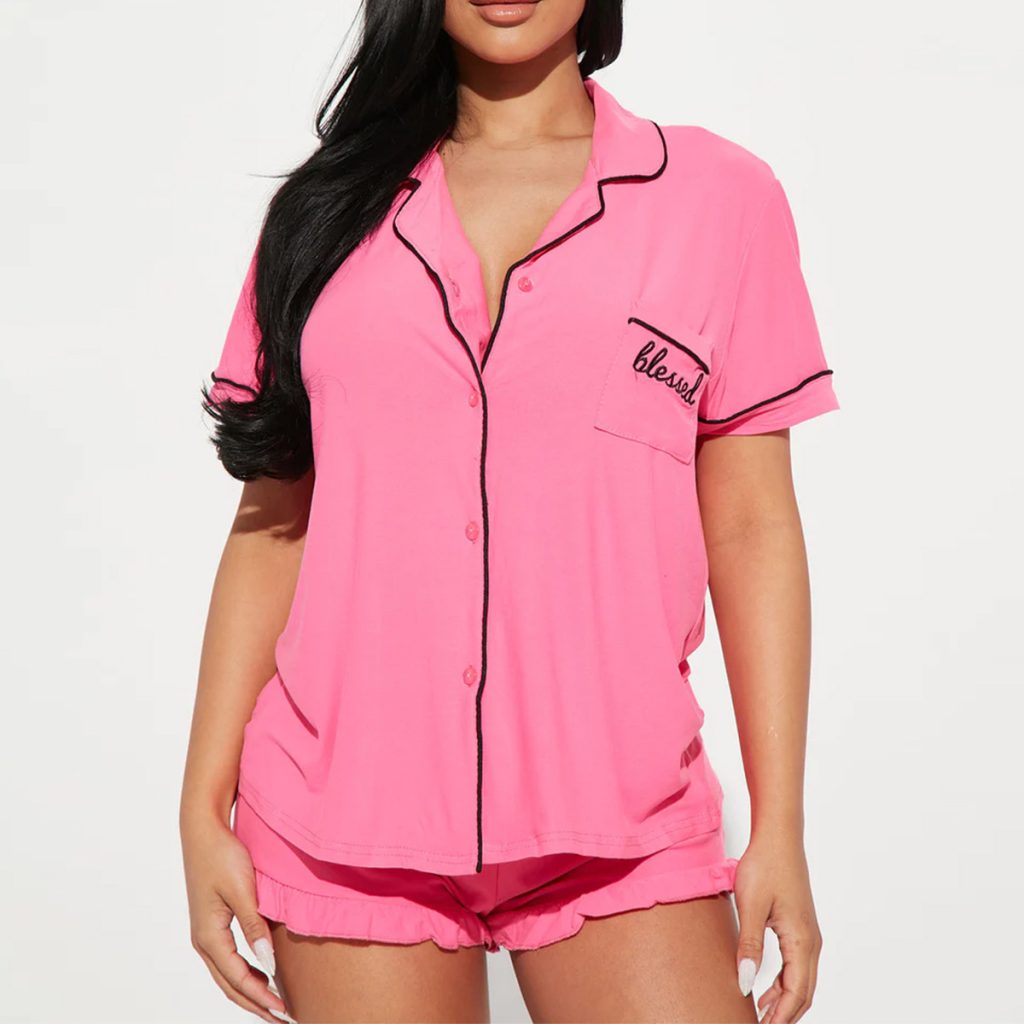
There is a moment each evening, often brief and unceremonious, when the day’s clothes come off and sleepwear goes on. For many people, this transition happens without thought — an old t-shirt here, a pair of worn shorts there. Yet this small ritual, repeated thousands of times across a lifetime, holds more significance than most realize. What you wear to sleep is not merely a matter of modesty or warmth. It is the foundation of rest itself.
Sleep as a Separateness
Human beings have always marked the boundary between waking and sleeping with some form of change. The removal of day clothes and the donning of night clothes signals to the brain that one phase is ending and another beginning. This physical transition supports a psychological one. Without it, the boundaries between work, rest, and personal time blur into an undifferentiated haze — a particular problem in an era when many people both live and work in the same spaces.
Quality sleepwear serves as a ritual tool. The act of changing into proper pajamas tells your nervous system that performance demands have ended and restoration has begun. Over time, this association strengthens. The very touch of soft fabric against skin becomes a conditioned cue for relaxation.
The Fabric of Rest
Sleep is not a single state but a cycling through different stages, each requiring specific physiological conditions. Body temperature fluctuates across the night, typically dropping in the early hours of sleep and rising toward morning. Fabric choices either support or fight against this natural rhythm.
Breathable natural fibers — cotton, linen, bamboo, modal — allow heat and moisture to escape, helping the body regulate its own temperature. Synthetics, by contrast, trap heat and moisture, potentially disrupting the temperature shifts necessary for deep sleep. For those who sleep hot, lightweight cotton or bamboo makes an immediate and noticeable difference. For those who sleep cold, flannel or heavier knits provide warmth without the clamminess of synthetic alternatives.
The texture of fabric against skin also matters, though this varies by individual sensitivity. Some people cannot tolerate any roughness or seam placement. Others are undisturbed by quite substantial texture. The right sleepwear is the one you personally stop feeling shortly after putting it on — the fabric that disappears from awareness, leaving you alone with sleep.
Beyond Utility
Sleepwear occupies an unusual position in the wardrobe. No one sees it except those with whom you share close quarters. It serves no public function. And yet, there is a genuine emotional benefit to wearing sleepwear that feels pleasant, fits well, and looks reasonably attractive — even if you are the only person who knows.
This benefit is not vanity. It is a form of self-respect. The message you send yourself by putting on quality sleepwear is that your rest matters, your comfort matters, you matter. That message, repeated night after night, accumulates into something real. People who treat their own rest as important are more likely to rest well.
Starting the Ritual
Creating a sleepwear ritual need not be elaborate. Choose two or three pairs of pajamas that fit well and feel genuinely comfortable — not aspirational comfort, but actual, physical ease. Keep them in a designated drawer or shelf. Each evening, before you are entirely exhausted, take the three minutes required to change out of day clothes and into sleepwear. That is the entire ritual. Its power lies not in complexity but in consistency.
After a few weeks, notice whether the act of changing feels different. For many people, it shifts from an optional step to an anticipated one — a small kindness performed for the self at the end of each day. And that kindness sets the stage for the larger kindness of restful, restorative sleep.