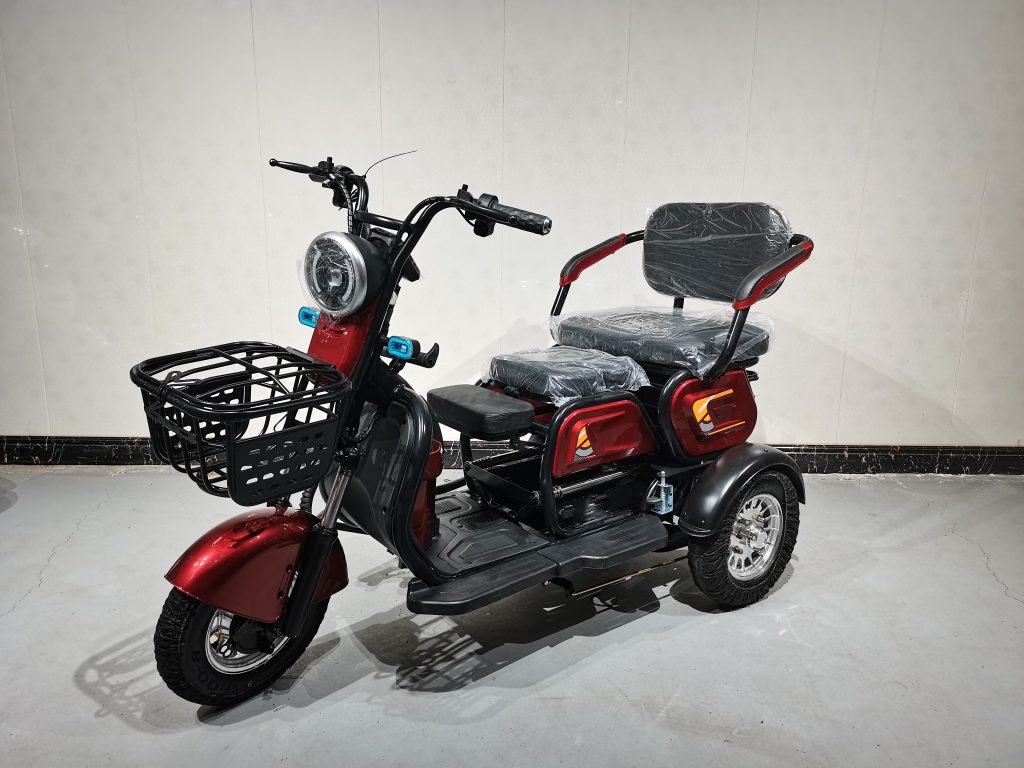
An electric tricycle (also called an e-tricycle or e-rickshaw) is a three-wheeled vehicle powered by an electric motor and a rechargeable battery. It combines the stability of three wheels with the low operating cost of electric power.
How It Works
- Battery stores electricity (lead-acid or lithium)
- Controller manages power flow
- Motor drives the rear wheels (500W to 2000W)
- Throttle controls speed — twist and go
Simply plug into any standard wall outlet. A full charge takes 4–8 hours and costs less than $1.
Main Types
| Type | Best For | Payload |
|---|---|---|
| Cargo | Parcel delivery, vegetables, waste | 300–800 kg |
| Passenger | Short trips, school runs, tourism | 4–6 people |
| Flatbed | Building materials, water tanks | 400–600 kg |
| Personal | Elderly riders, grocery shopping | 50–150 kg |
Key Advantages
✅ Cheap to run – Electricity costs 80% less than gasoline
✅ Low maintenance – No oil, no spark plugs, no clutch
✅ Quiet – Almost silent operation
✅ Zero emissions – No exhaust smoke
✅ Easy to drive – No balance needed
✅ Simple charging – Any household outlet
Limitations
⚠️ Range: 50–90 km per charge (city use only)
⚠️ Speed: 25–45 km/h (not for highways)
⚠️ Charging time: 4–8 hours
⚠️ Hills: Heavy loads on steep slopes can be challenging
Who Uses E-Tricycles?
- Delivery companies
- Market traders
- Public transport drivers
- Farmers
- Street vendors
- Municipal waste collectors
- Families in urban areas