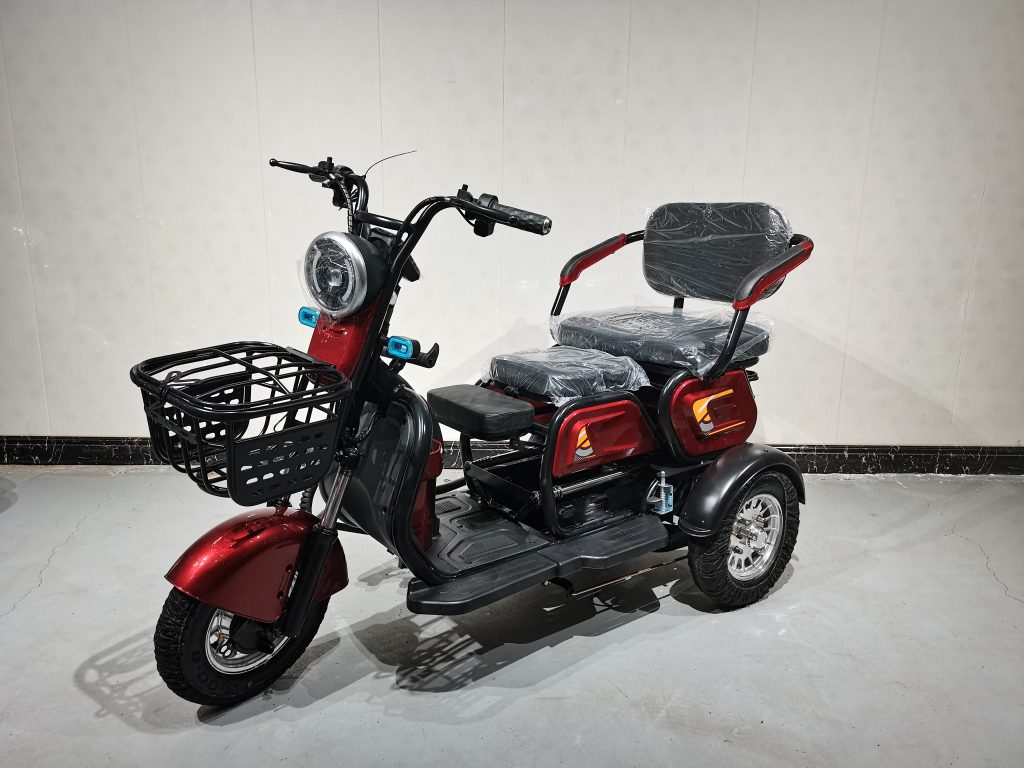
In many developing economies, the three-wheeled gasoline vehicle — whether called tuk-tuk, bajaj, auto-rickshaw, or keke — has long been a backbone of urban transport. It carries people, delivers goods, and provides livelihoods for millions of drivers. But rising fuel prices and aging engines are turning these micro-entrepreneurs’ most valuable asset into an unaffordable burden.
Across Africa, South Asia, and Latin America, a quieter, cleaner, and far more profitable alternative is taking root: the electric tricycle (e-tricycle) . As a manufacturer serving these markets directly, we have seen how one simple vehicle can double a driver’s daily income while eliminating fuel bills entirely.
From Fuel Poverty to Energy Independence
For a typical tuk-tuk driver in Nigeria, Kenya, or Bangladesh, fuel consumes 35–50% of daily revenue. With gasoline prices fluctuating wildly, a driver never knows how much of their hard-earned fare will vanish at the pump.
An electric tricycle changes that equation completely:
- Fuel cost → $0 (replaced by $0.50–1.00 of electricity per full charge)
- Daily range: 60–80 km on a single charge (enough for 8–10 hours of stop-and-go driving)
- Charging options: Standard wall outlet (4–6 hours) or swappable battery stations emerging in major cities
Real example: A driver in Lagos, Nigeria, previously earned ~$9 after fuel costs on a gasoline tuk-tuk. After switching to our 1500W e-tricycle, daily take-home profit rose to ~$17 — an 89% increase, simply by removing fuel from the expense column.
Lower Maintenance, More Time on the Road
Internal combustion engines in low-cost tuk-tuks are notorious for breakdowns — clogged carburetors, overheated cylinder heads, failed starters, and leaking oil seals. Each breakdown means lost income and a costly mechanic visit.
Electric tricycles have no engine oil, no spark plugs, no clutch, no exhaust system, no radiator. The maintenance checklist is refreshingly short:
- Check tire pressure (weekly)
- Inspect brake pads (monthly)
- Ensure battery terminals are clean (monthly)
- That’s it for routine work
For fleet owners or driver cooperatives, lower downtime means higher utilization. One e-tricycle can reliably operate 300+ days per year, compared to 200–250 days for many gasoline competitors.
Finance-Friendly: Lower Total Cost of Ownership
Yes, an electric tricycle has a higher upfront price (typically $1,200–2,500 depending on battery type) compared to a used gasoline tuk-tuk ($500–1,000). But when micro-lenders or savings groups calculate total cost over 24 months, the electric option wins decisively.
| Cost over 2 years | Gasoline Tuk-Tuk | Electric Tricycle (LiFePO₄ battery) |
|---|---|---|
| Vehicle price | $800 | $1,800 |
| Fuel/electricity | $2,400 | $300 |
| Maintenance & repairs | $600 | $150 |
| Total 2-year cost | $3,800 | $2,250 |
Even with a micro-loan at 15–20% interest, the e-tricycle owner reaches break-even faster and enjoys higher net income for the remaining loan period.
Social & Environmental Benefits That Serve the Whole Community
Beyond individual drivers, e-tricycles improve quality of life for everyone:
- Zero tailpipe emissions → Drivers no longer breathe exhaust fumes for 10 hours daily. Respiratory illness rates drop.
- Silent operation → Nighttime transport becomes possible without waking entire neighborhoods. Hospital trips, airport runs, and market deliveries can happen at 2 AM without complaints.
- Reduced dependence on imported fuel → More money stays in the local economy instead of flowing to distant oil refineries.
Use Cases That Work Today
Passenger e-rickshaw (seats 4–6)
Common in India, Bangladesh, and Nepal. Perfect for short urban trips (1–5 km). Women passengers often prefer e-rickshaws because they are quieter and less intimidating than loud, smoky diesel alternatives.
Cargo e-tricycle for market traders
Vegetable sellers, water distributors, and furniture movers. A 2.2m cargo bed with removable side rails can handle 500 kg of goods. Some customers add a simple tarp canopy for weather protection.
Mobile vendor / food cart
A flatbed e-tricycle with a stainless steel counter and gas stove (LPG). The vehicle moves the vendor to the best selling locations without pushing a heavy cart.
What to Look for When Buying E-Tricycles for Emerging Markets
If you are an importer, development program, or microfinance institution, prioritize:
- Robust frame with reinforced motor mount (roads are rarely smooth)
- High ground clearance (180mm+) to avoid scraping on speed bumps and unpaved roads
- Simple dashboard (speed, battery gauge, headlight switch) — no complex digital screens that fail in dusty or rainy conditions
- Universal spare parts (controllers and brake shoes interchangeable with common local models)
- Lead-acid compatibility (if lithium is too expensive for your market, we can supply maintenance-free gel batteries as a lower-cost entry point)