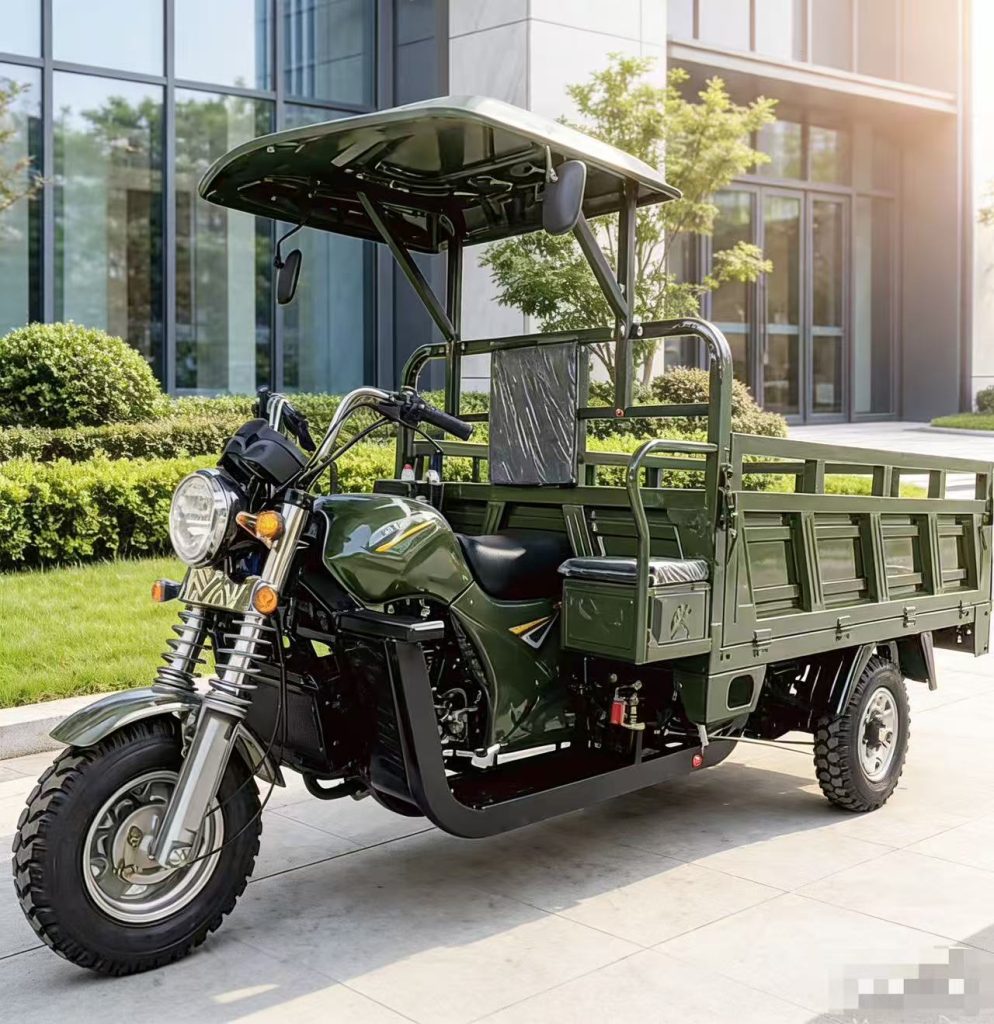
The Industry Backstory
What began as a simple utility vehicle on Chinese rural roads has transformed into a multi-million-dollar export industry. The three-wheeled vehicle, traditionally overlooked by mainstream automakers, has quietly become one of China’s most successful light-transportation exports. And for good reason: no other vehicle class offers the same combination of low cost, high durability, and sheer versatility.
The Numbers Don’t Lie
Industry data shows that China exports hundreds of thousands of three-wheeled vehicles annually. Major production hubs in Shandong, Henan, and Jiangsu provinces operate at near-full capacity year-round. The export order backlog for many manufacturers now stretches well beyond 12 months—a clear signal that international demand has never been higher.
So what’s driving this surge?
Factor 1: The Last-Mile Delivery Boom
E-commerce and on-demand delivery services have exploded worldwide. From Amazon delivery contractors in the United States to Jumia couriers in Africa, businesses are searching for affordable, nimble vehicles that can navigate narrow streets, carry substantial loads, and operate at a fraction of the cost of traditional vans or trucks.
Three-wheeled vehicles check every box:
- Compact footprint for urban maneuvering
- Payload capacity of 300–800 kg
- Operating costs 60–80% lower than four-wheeled commercial vehicles
- Minimal maintenance requirements
Factor 2: Agricultural Mechanization
Smallholder farmers in developing economies are increasingly adopting mechanized solutions to boost productivity. Three-wheeled vehicles serve multiple farm functions:
- Transporting produce from field to market
- Hauling feed, fertilizer, and equipment
- Acting as mobile irrigation or spraying platforms
- Ferrying farm workers across large properties
At a price point accessible to individual farmers—not just large agribusinesses—these vehicles are democratizing agricultural mechanization.
Factor 3: Urban Micro-Enterprise
In cities across Africa, Latin America, and South Asia, three-wheeled vehicles have become the backbone of informal commerce:
- Mobile kitchens: Vendors cook and sell street food directly from their vehicles
- Water delivery: Customized tankers bring clean water to underserved neighborhoods
- Waste collection: Small-scale recyclers use them for door-to-door pickup
- Tourism: Coastal resorts use colorful tricycles for sightseeing tours
Factor 4: Government Procurement
Several national and local governments have begun procuring three-wheeled vehicles for public services:
- Municipal sanitation departments (street sweeping, garbage collection)
- Postal and parcel delivery services
- Public health outreach (mobile clinics)
- School meal delivery programs
The combination of low purchase cost and minimal training requirements makes them ideal for public-sector fleets in developing regions.
Competitive Advantages of Chinese Manufacturers
Global buyers consistently cite several reasons for choosing Chinese suppliers over domestic or regional alternatives:
Supply Chain Integration
China’s three-wheeled industry benefits from a mature, vertically integrated supply chain. Key components—motors, batteries, controllers, tires, suspension systems—are produced within a tight geographic radius. This proximity reduces procurement costs, shortens lead times, and ensures consistent quality.
Manufacturing Scale
High-volume production enables Chinese factories to achieve economies of scale that competitors in other countries simply cannot match. The unit cost advantage typically ranges from 25–40%, even after shipping and import duties.
Rapid Prototyping
Chinese manufacturers excel at translating buyer specifications into production-ready prototypes quickly. A custom order can often move from initial design to sample delivery in 15–20 days—a timeline that surprises many international buyers accustomed to slower manufacturing ecosystems.
Continuous Innovation
Far from resting on past successes, Chinese tricycle factories invest heavily in research and development:
- Smart connectivity: GPS tracking, remote diagnostics, and fleet management apps
- Battery technology: Extended-range lithium battery options with fast-charging capability
- Safety systems: Anti-lock braking, daytime running lights, and enhanced rollover protection
- Ergonomics: Improved suspension, adjustable seating, and reduced cabin vibration
Understanding Your Market: A Buyer’s Guide
For prospective buyers and distributors, we offer the following recommendations:
| Market | Recommended Model | Key Feature | Priority Customization |
|---|---|---|---|
| South America | Heavy-duty cargo | High torque for hilly terrain | Extra-large cargo bed, reinforced rear axle |
| Southeast Asia | Passenger tricycle | Weather protection | Canopy roof, side curtains, multi-passenger seating |
| East Africa | Off-road utility | Ground clearance | Knobby tires, heavy-duty leaf springs, toolbox storage |
| Europe | Compact electric | Street-legal certification | EEC compliance, turn signals, speed limiter |
| Middle East | Insulated cargo | Heat resistance | Refrigerated box, solar panel option, dust-proof seals |
Operational Advantages for Fleet Owners
Fleet operators who have switched to three-wheeled vehicles report measurable improvements:
- Reduced fuel bills: Electric models cut energy costs by 80–90% compared to gasoline vans
- Lower insurance premiums: Lower speed and weight translate to reduced liability risk
- Simplified driver training: Operators can learn basic operation within hours
- Fewer parking challenges: Small footprint means easier urban parking and lower parking fees
- Extended vehicle life: Simple mechanical design means fewer breakdowns and cheaper parts
Environmental Impact
The transportation sector accounts for a significant share of global carbon emissions. Electric three-wheeled vehicles offer a practical pathway to reduce emissions in last-mile logistics without the infrastructure investment required for full-sized electric trucks.
For a fleet of 100 electric tricycles operating 250 days per year:
- Annual CO₂ reduction: approximately 120–150 metric tons (compared to gasoline equivalents)
- Annual fuel cost savings: $40,000–$60,000
- Maintenance cost reduction: $15,000–$20,000
These figures make a compelling business case for environmentally conscious buyers and government tender applicants alike.
After-Sales Support and Spare Parts
Our commitment to buyers extends far beyond the initial sale. We maintain:
- Regional spare parts warehouses in key export markets for rapid fulfillment
- Technical training programs for local mechanics and service centers
- Digital parts catalogs with illustrated diagrams and ordering interfaces
- Online technical support available in multiple languages
- Warranty coverage with responsive claims processing
Getting Started: Your Path to Partnership
We welcome inquiries from:
- Independent distributors seeking exclusive territorial rights
- Commercial fleet operators requiring customized vehicle specifications
- Government agencies planning public-service vehicle procurement
- NGOs and development organizations supporting transportation infrastructure projects
Our team offers comprehensive support throughout the buyer journey:
- Needs assessment: Understanding your operational requirements and market conditions
- Vehicle selection: Recommending optimal models and configurations
- Sample production: Creating and shipping pre-production samples for approval
- Bulk manufacturing: Scaling production with rigorous quality oversight
- Logistics coordination: Managing shipping, insurance, and customs clearance
- After-sales transition: Training, parts provisioning, and ongoing support