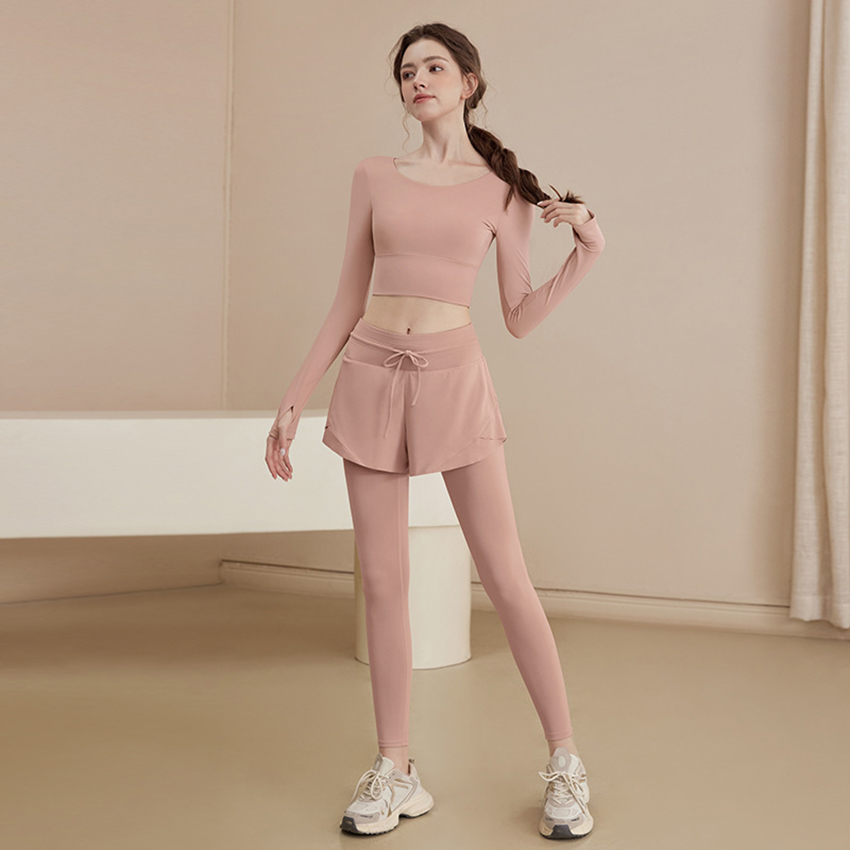
You‘ve probably had this experience: you find the perfect pair of yoga leggings — great color, flattering cut, just the right length. Two weeks later, they’re pilling between the thighs. Three washes in, the waistband is starting to roll. A month later, they‘re see-through when you bend over.
The culprit isn’t your laundry routine. It‘s the fabric.
In yoga wear, the material isn’t just a detail — it‘s the whole story. Here’s what separates high-quality performance fabrics from the ones that end up in the back of your drawer.
Four-Way Stretch
This is non-negotiable for any pose. Four-way stretch fabric moves with you in every direction — forward, backward, side to side. It ensures your leggings don‘t resist your movements or bind at the hips and knees. A good four-way stretch fabric retains its shape, recovering quickly without bagging out in the knees or seat.
Moisture-Wicking
The name says it all. A high-quality yoga fabric pulls sweat away from your skin and spreads it across the surface of the garment, where it evaporates quickly. Fabrics that trap moisture against the skin don’t just feel uncomfortable — they increase friction, leading to chafing. They can also cause skin irritation and make you feel cold as the sweat cools on your body.
Breathability
Breathability is about air circulation. Micro-pores or open-knit structures allow heat and vapor to escape, keeping your body at an even, comfortable temperature throughout your practice.
Weight and Coverage
Here‘s where cost-cutting often shows up. Cheaper fabrics reduce yarn density — fewer threads per square inch — which saves money but sacrifices opacity. That’s why some leggings become translucent when you stretch or bend. Premium fabrics use denser weaves or specific yarn blends to maintain opacity even under tension.